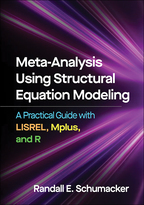
Meta-Analysis Using Structural Equation Modeling
A Practical Guide with LISREL, Mplus, and R
Randall E. Schumacker
HardcoverPaperbacke-bookprint + e-book
Hardcover
pre-orderNovember 16, 2026
ISBN 9781462564934
Price: $98.00 168 Pages
Size: 7" x 10"
Paperback
pre-orderOctober 19, 2026
ISBN 9781462564927
Price: $65.00168 Pages
Size: 7" x 10"
 Request a free digital professor copy on VitalSource ?
Filling a gap in the contemporary literature, this practical guide shows how structural equation modeling (SEM) can be used to analyze results from multiple different studies on the same subject. Randall E. Schumacker presents programs using LISREL, Mplus, and R software, complete with worked-through examples, procedural steps, and sample annotated code. He provides an overview of meta-analysis and the basic SEM modeling steps before delving into meta-analysis in path models, confirmatory factor models, and structural equation models (MASEM). The book offers insights into why meta-analysis should be considered a multilevel method since data are collected over several years, making time a nested effect. It discusses key MASEM issues, such as publication bias, sample size differences between studies, and the heterogeneity of effect sizes across studies, and reviews PRISMA reporting guidelines aligned with APA style. Full code and output for the book's examples can be accessed at the companion website.
This title is part of the Methodology in the Social Sciences Series, edited by Todd D. Little, PhD.
“This book represents an important integration of meta-analysis and SEM. Dr. Schumacker describes the cutting edge of meta-analytic SEM in a way that is understandable to virtually all social science researchers or doctoral students. The multiple examples and extensive sample syntax allow readers to adapt and apply these techniques to their own data. After reading this book, you will have the knowledge and tools to fit complex—and more realistic—multivariate models to your meta-analytic data.”

—Noel A. Card, PhD, Director, Quantitative Methods in Family and Social Sciences, University of Georgia
“This exceptional book outlines the history of research synthesis procedures and provides a practical and easy-to-follow guide to conducting meta-analyses using SEM. Many concrete examples with computer programs using LISREL, Mplus, and R guide the researcher through the steps of conducting meta-analyses. This book is a gem!”
—Bradley T. Erford, PhD, Department of Human and Organizational Development, Vanderbilt University
“Schumacker thoroughly reviews all topics needed to effectively conduct meta-analyses using SEM, from the historical background to clear explanations of the various types of literature reviews, available software packages, and step-by-step methods. The book's examples include effective explanatory notes that facilitate understanding and translation to one's own projects. An excellent text for the beginning meta-analyst!”
—Marie S. Hammond, PhD, Professor and Distinguished Researcher, Department of Psychological Sciences and Counseling, Tennessee State University
Table of Contents
Preface
1. Historical Overview
2. Literature Search Review
3. Meta-Analysis Software
4. Basic Meta-Analysis Statistics
5. Basic Structural Equation Modeling
6. Meta-Analysis Assumptions, Steps, and Model Types
7. Path Model MASEM
8. Factor Model MASEM
9. Structural Equation Model MASEM
10. Multi-Level Analysis in Meta-Analysis
11. SEM and MASEM Issues
12. Afterword
References
Author Index
Subject Index
About the Author