Print
Print
 Create flyer
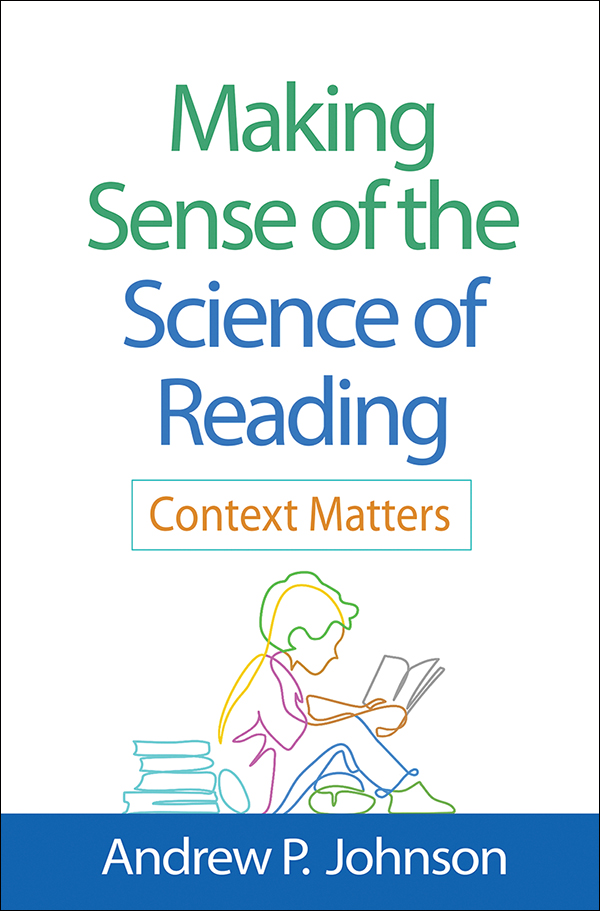
Making Sense of the Science of Reading
Context Matters
Andrew P. Johnson
 Request a free digital professor copy on VitalSource ?
I. Understanding the Problem
1. What Is the Science of Reading? 
2. Context Matters
3. A Crisis in Reading That Isn’t
II. Understanding Research
4. Understanding Science, Research, and Research Methods
5. Understanding Theories
6. Understanding Evidence-Based Instruction and Whole Language
7. Understanding Paradigms
8. Becoming a Responsible Consumer of Educational Research
III. Understanding the Reading Process
9. Word Activation and Semantic Connections
10. Cognitive Science, Reading, and Orthographic Mapping
11. Three Cueing Systems and the Three-Cueing System
12. Research to Support the Three-Cueing System
13. Applying the Research
14. Children of the Code
IV. Understanding Reading Instruction
15. Using Direct and Explicit Instruction to Teach Skills in Reading
16. The Glorious Music of Balanced Literacy Instruction
17. What Dance Can Teach Us about Reading Instruction
18. Phonemic Awareness, Time, Magic, and the Challenge
V. Understanding Assessment—and the Greater Context
19. Criterion-Referenced Tests, Norm-Referenced Tests, Academic Performance Standards—and Miracles
20. Teaching and Teachers
21. Epilogue: Education Sciences Reform Act of 2002
Appendix
References
Index