Print
Print
 Create flyer
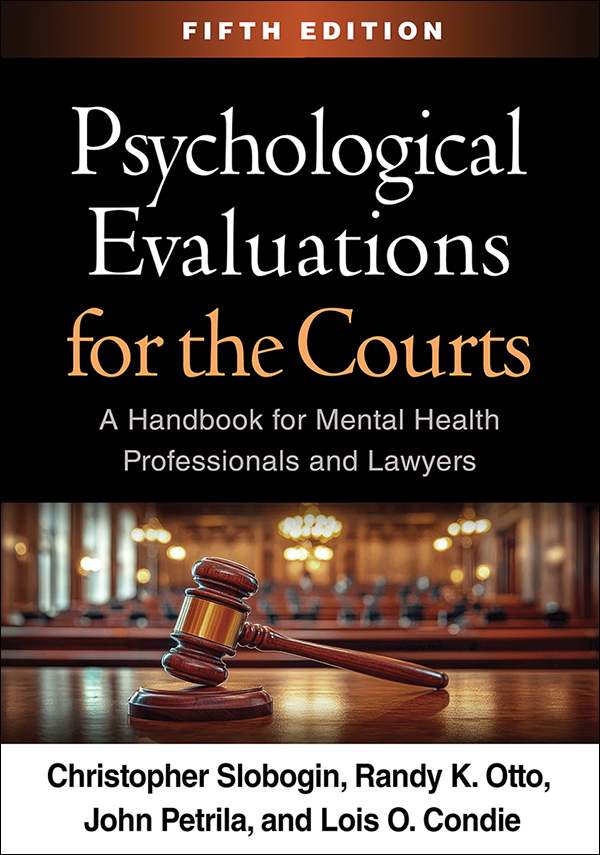
Psychological Evaluations for the Courts
Fifth Edition
A Handbook for Mental Health Professionals and Lawyers
Christopher Slobogin, Randy K. Otto, John Petrila, and Lois O. Condie
Hardcovere-bookprint + e-book
Hardcover
orderOctober 14, 2026
ISBN 9781462563425
Price: $140.00 1020 Pages
Size: 7" x 10"
 Request a free digital professor copy on VitalSource ?
The new edition will be published October 14, 2026. If you need this title before then, please see the previous edition.
Professors: Do you need to make an adoption decision or update your syllabus for the next term? Request a set of page proofs now for immediate review.
Read a Q&A with featured author, Christopher Slobogin!
Professors: Do you need to make an adoption decision or update your syllabus for the next term? Request a set of page proofs now for immediate review.
Read a Q&A with featured author, Christopher Slobogin!
This definitive text and practitioner resource—now in a revised and updated fifth edition reflecting significant developments in the field—comprehensively reviews the legal issues that mental health professionals are most frequently asked to address. The volume demystifies the forensic psychological assessment process and provides guidelines for participating effectively and ethically in legal proceedings. It describes and analyzes legal and clinical concepts and evidence-based assessment procedures pertaining to evaluations of criminal and civil competencies; mental state defenses; sentencing; civil commitment; workers' compensation and mental injury claims; federal education, Social Security, immigration and antidiscrimination laws; child welfare and custody decisions; juvenile justice; and other contexts. Case examples, exercises, and a glossary of legal and clinical terms facilitate learning; 19 sample reports with commentary illustrate how to write up thorough, legally admissible evaluations.
New to This Edition
New to This Edition
- Updated empirical research on competency, interrogation practices, risk assessment, the effects of divorce on children, neurological and developmental science, and more.
- Recent court rulings, evidentiary rules, and regulatory shifts.
- Increased attention to race, culture, and culturally competent practice.
- New topics: the rise of remote evaluations, debates over recording evaluations, the trend toward privatization of forensic services, the use of social media data in investigations, implications of artificial intelligence for forensic practice, the “competency crisis,” substance abuse commitment, the Relevancy-Focused report format (including a new sample report), and more.