
|
"Our pioneering series books set the standard for topics like executive function and response to intervention, as well as PBIS, CBM, SEL, DBT in schools, and more. I think it's apparent that Ken Merrell's hands-on editorial ethic and practical wisdom shaped how both Chris Riley-Tillman and Sandy Chafouleas have approached the series editor role after him. This strong combination of research grounding and practical know-how continues to guide what gets published in the series." —Craig Thomas, Senior Editor, Literacy and Educational Psychology |
New to the Series
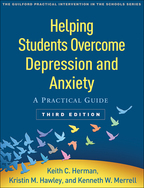
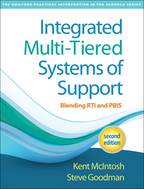
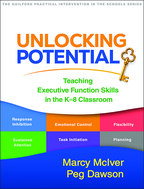
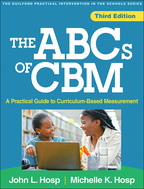
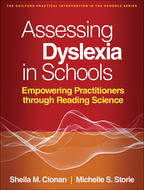
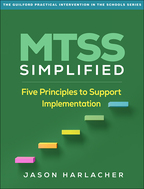
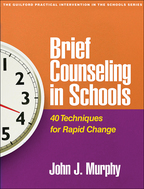
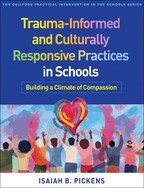


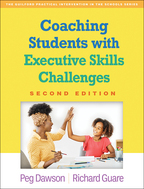
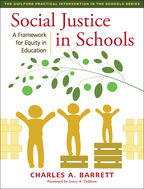
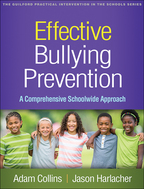
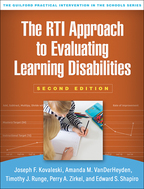
Twenty-Five Years of ‘Practical Intervention in the Schools’: Reflections on the Guilford Press Series
Authors: Sandra M. Chafouleas and T. Chris Riley-Tillman
Twenty-five years ago, a new book series emerged with a simple mission: to provide practical, evidence-based resources that school practitioners would find highly usable. The Guilford Practical Intervention in the Schools Series was born from recognition that a gap between research and practice in school psychology was a barrier to serving schools effectively. A quarter of a century later, the series stands as a testament to what happens when science and practice converge. With dozens of titles spanning topics from academic assessment to social-emotional learning, from crisis response to culturally responsive practice, the series has become a go-to resource for school psychologists, educators, and related professionals. This milestone anniversary invites reflection not only on what has been accomplished, but on the vision that made it possible and the evolution that keeps it relevant.
The Foundation: Ken Merrell's Vision
The Guilford Practical Intervention in the Schools Series bears the indelible imprint of its founding editor, Dr. Kenneth W. Merrell. Ken's vision for the series emerged through acknowledgement that research often had no clear pathway to implementation, and that practitioners faced frustration in seeking usable evidence-based solutions. When the series concept was forming, Ken was clear in the mission to bring research findings in accessible ways.
Ken established standards for what would define a book in the series. Each book would be grounded in empirical evidence, yet written in accessible language with reproducible materials, implementation guidance, and case examples that show the complexity of real school contexts. School psychologists would be the primary target audience, yet books in the series were accessible for use by a broad range of school-based practitioners, including school leaders, related services personnel, and teachers. Perhaps most importantly, he would source authors who understood both the science behind interventions and the realities of implementing them in systems with limited resources, competing demands, and diverse school contexts.
Under Ken's editorial leadership, the series grew from a promising concept to an essential collection. Those of us who had the privilege of working with Ken remember his enthusiasm for work that truly had impact on schools. As we each have taken a turn at the editorial helm following Ken's untimely death in 2011, we have been keenly aware that we inherited not just a book series but a legacy of commitment to the field. Ken had many impacts on the field of school psychology, yet this series is undoubtably one of the most broadly impactful.
Impact and Evolution: The Practitioner–Scientist Model in Action
Twenty-five years of publishing has yielded over 40 published titles. These books have reached practitioners, researchers, and graduate students across six continents, with select titles translated into multiple languages including Spanish, Chinese, and Korean. The series has demonstrated remarkable staying power, with many titles having gone through multiple editions. Several titles have earned recognition through professional awards or been featured in recommended reading lists. Further, series titles have been referenced in thousands of peer-reviewed publications, doctoral dissertations, and professional presentations. Authors regularly report hearing from users who credit series titles with providing the tools needed to launch new initiatives in their schools or districts.
The landscape of school psychology has transformed over the past 25 years, and The Guilford Practical Intervention in the Schools Series has evolved alongside it. Frameworks have matured to comprehensive systems that integrate academic, behavioral, and social-emotional supports. The texts in the series have reflected this evolution, expanding from a primary focus on individual and small-group interventions to situating these practices within culturally responsive approaches, whole-school prevention frameworks, and systems-level implementation. The topical breadth of the series has become wide-ranging, reflecting the evolving scope of school psychology practice.
Emphasis on data-based decision making has continued as a core professional competence. Mental health and well-being have increased in focus, reflecting school psychologists’ roles in supporting both student and educator well-being. Contemporary series books examine how culture and context shape assessment and intervention, address systemic factors that contribute to disparities, and explore the profession's role in perpetuating and dismantling inequitable practices.
Throughout these evolutions, the series has maintained focus where research informs practice and practice generates questions that drive research forward. Emerging questions from the field shape the focus of new books. The series has become not just a mechanism for disseminating research to practice, but a platform for capturing practice-based evidence and practitioner wisdom that can inform future research and resource development. Looking ahead, this bidirectional dialogue remains as essential as ever.
Looking Ahead: The Next 25 Years
The next 25 years will undoubtedly bring changes that are unanticipated today, yet the core mission of bridging research and practice will remain constant. The challenges facing today's schools are complex and urgent. Evidence-based, practical tools for addressing those challenges are necessities, not luxuries for school psychologists.
The Guilford Practical Intervention in the Schools Series has exceeded anything either of us might have envisioned as the first books in the series were rolled out. Ken's initial vision, combined with The Guilford Press's editorial work, helped establish a foundational resource in the field. In addition, we are grateful for the many authors who have contributed their expertise and committed to providing accessible guidance. We thank the reviewers whose feedback strengthened every manuscript and appreciate the unwavering commitment by the editorial teams at The Guilford Press. And we are grateful to the broader school psychology community for supporting the work through the adoption and feedback that fuels the series.
As the series continues forward, we invite your continued engagement. If you have ideas for volumes the series should develop, please reach out. If you've implemented approaches from series titles and have insights to share about what works and what doesn't, your feedback is welcome.
About the Authors
 Sandra M. Chafouleas, PhD assumed the role of series editor in 2019. Dr. Chafouleas is Board of Trustees Distinguished Professor of Educational Psychology in the Neag School of Education at the University of Connecticut. Her research focuses on work on usable practices that support the whole child, with specific expertise in strategies to support social, emotional, and behavioral well-being.
 T. Chris Riley-Tillman, PhD served as editor of The Guilford Practical Intervention in the Schools Series from 2011 to 2019. Dr. Riley-Tillman is Provost and Executive Vice President for Academic Affairs at Washington State University. His research addresses assessment and intervention within multi-tiered systems of support, single-case design, and evidence-based consultation practices.
